

Choosing a waterproof car cover
of reading
A car parked outside doesn't just endure rain. Pollen in spring, bird droppings, dust, wet leaves, UV rays, frost, or snow can tarnish the bodywork and complicate maintenance. A waterproof car cover creates a simple barrier between your vehicle and these daily aggressions. However, it's essential to choose a cover that is truly suited to your car, your climate, and your frequency of use.
Why cover your car when it's outside?
Regularly washing your car is useful, but it doesn't remove what accumulates between washes. A cover limits direct contact with moisture and dirt. It specifically prevents wet leaves from sticking to the hood or windshield for several days, a common situation under trees and near gardens.
Rain can also leave marks, especially when it carries dust, urban residue, or pollen. In some regions of the United States, snow, de-icing salt, and frost add to the problem. In very sunny areas, prolonged UV exposure is more likely to damage the paintwork, seals, and certain plastic elements. A well-chosen cover helps preserve the vehicle's appearance and reduces the time spent cleaning it.
It is particularly practical for a secondary car, a convertible, a classic vehicle, or a car parked for several days on a driveway, in front of the house, or in an outdoor car park. For a car used every day, it remains worthwhile if you have a few minutes to put it on and take it off correctly.
Waterproof car cover: beware of false good ideas
The word "waterproof" is reassuring, but it shouldn't be the only criterion. A completely waterproof cover, without any moisture evacuation, can promote condensation. If the bodywork is wet when the cover is put on, water can remain trapped under the cover. Over time, this is undesirable for both the paintwork and the metal elements.
The right balance is found in a cover that blocks rain while allowing the vehicle to breathe. A water-repellent or waterproof fabric, combined with a breathable design, helps limit moisture accumulation. Also check the softness of the inner surface. A soft lining or non-abrasive material is preferable to avoid micro-scratches, especially on dark or recently renovated paintwork.
A very thin universal cover can be useful for one night or a rain event. However, it offers less protection against wind, billows around the bodywork, and risks chafing if poorly secured. For regular use, a car-specific cover provides a more reliable hold and more comfortable daily protection.
Choosing the right size for your vehicle
A cover that is too small pulls on the mirrors, poorly covers the bumpers, and wears out faster. A cover that is too large catches the wind, retains more dust, and can move during the night. So, size matters as much as material.
Start by identifying your car's category: city car, sedan, coupe, SUV, pickup, or sports car. Then measure its total length, its width with the mirrors folded, and its height. If the dimensions are indicated in inches in the vehicle's manual or on an American spec sheet, take the time to compare them to the cover's measurements. A slightly generous cover is acceptable, but it should not form large folds on the roof or sides.
Semi-custom covers offer a good compromise for most motorists. They conform better to general shapes than a rectangular model while remaining easy to install. A custom-made cover offers a more precise finish, but it is especially relevant for a vehicle with particular dimensions, a vintage car, or a model you wish to keep for a long time.
Details that truly improve the fit
A useful cover must stay in place when the wind picks up. Look for an elasticated hem at the front and back, as well as fastening straps under the vehicle. These elements prevent the cover from lifting or blowing away during a downpour.
Adjustable straps are practical if your car is parked in an exposed area, near the coast, or in a windy region. For outdoor use, reinforced eyelets can also allow for the addition of a fastening device. However, you should never overtighten: the cover should be held in place, not compressed against the bodywork.
Adapting protection to your region's climate
Not all weather conditions require the same level of protection. A light, breathable, and UV-resistant cover may suffice in a hot, dry region where the main threat comes from sun and dust. In a humid climate, opt for a waterproof cover that also promotes air circulation.
If your region experiences frequent rain, choose a model whose seams and fastening areas are designed to withstand repeated outdoor use. For cold winters, a thicker cover helps insulate the vehicle from frost, light snow, and wind-borne debris. It does not replace a shelter during a severe hailstorm, but it can limit daily minor aggressions.
Motorists living near trees should also consider sap, thin branches, and bird droppings. These elements may seem harmless, but they can mark paintwork when left in the sun for a long time. A cover that is regularly removed and cleaned as needed prevents this dirt from accumulating directly on the bodywork.
Properly fitting the cover without damaging the paintwork
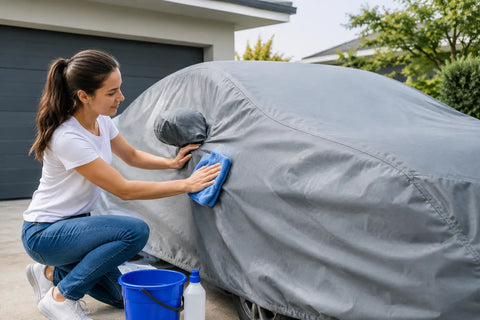
A car cover provides its best results on clean and dry bodywork. Putting a cover on a car covered in sand, mud, or thick dust can cause friction. This risk increases when the wind moves the fabric. It is not necessary to wash the car before each fitting, but regular rinsing or dusting remains a good habit.
Unfold the cover and locate the front side, usually indicated by a label. Start with the front bumper, move up to the windshield, then cover the roof and the back. Fold in the mirrors if the cover's shape allows it. Finally, install the straps under the vehicle without letting them drag on the ground.
Before driving off, completely remove the cover and shake it if it contains leaves, sand, or snow. Never drive with a cover partially removed or placed on the roof: it can obstruct visibility and get caught in the wheels.
Maintaining your cover so it protects for a long time
The cover protects the car, but it also deserves a minimum of maintenance. After a long period outside, shake it to remove leaves, dust, and small debris. If it is very dirty, follow the washing recommendations indicated for its fabric. Washing at too high a temperature or using an aggressive product can reduce the water-repellent properties of certain materials.
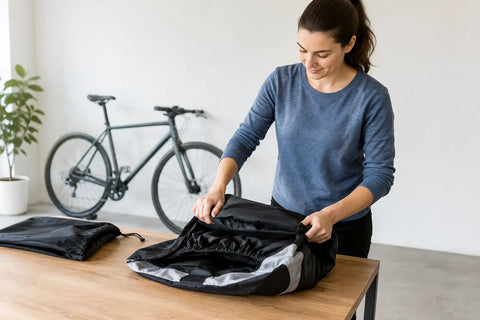
Always let the cover dry completely before folding and storing it. A damp cover enclosed in its bag can develop odors and mold stains. For vehicles used infrequently, keep it handy in the trunk or in a dry area of the garage so you can put it on as soon as the weather deteriorates.
At 1001 Housses, the objective remains simple: to help you find a cover that matches your actual use, not just an approximate dimension. Think about how your car sleeps most often – under the sun, near trees, facing the wind, or outdoors all winter. It's this concrete detail that will guide you towards protection that you will want to use, season after season.