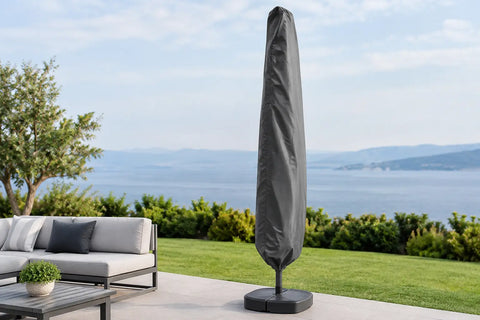


Barbecue patio wind protection - how to choose
of reading
A barbecue facing directly into the wind often marks the start of minor problems that spoil a simple moment. Unstable flame, smoke blowing back onto the table, clattering lid, lifting cover, falling accessories. Good wind protection for your patio barbecue isn't just about making cooking more comfortable. It also helps protect the equipment, secure the area, and maintain a more enjoyable patio throughout the seasons.
On a patio, wind doesn't behave the same way as in an open garden. It funnels between two walls, bounces off a railing, accelerates in a corner, then changes direction without warning. This is why a solution that works for a neighbor won't necessarily yield the same results for you. The right choice primarily depends on the barbecue's location, exposure, and frequency of use.
Why patio barbecue wind protection truly changes usage
We often think of comfort first, but the primary concern is control. When the wind is poorly managed, cooking becomes less consistent. On a charcoal barbecue, it can fan the embers too strongly or, conversely, disperse the heat. On a gas model, it can disrupt the flame and make cooking less even. In both cases, you spend more time compensating than cooking.
There's also the question of lifespan. A wind-exposed patio often brings dust, humidity, pollen, and sometimes fine, wind-driven rain. Without adequate protection, the barbecue gets dirty faster. Exterior surfaces age more quickly, metal parts remain exposed longer, and small accessories suffer before you even notice.
Finally, wind impacts practicality. A pleasant patio is one where everything stays in its place. If you have to bring the barbecue in after each use, put cushions away, or watch over the cover at the slightest gust of wind, the equipment becomes a hassle. The right level of protection allows you to regain a simple routine.
Where to place your barbecue on a windy patio
Even the best accessory can't compensate for a bad location. Before buying a cover, windbreak, or screen, take a few minutes to observe your patio. Does the wind always come from the same direction, or does it change with the weather? Do a facade, partition, or railing create an air tunnel? Is one area calmer than others?
Generally, it's best to avoid corners where the wind accelerates. A corner between two walls might seem sheltered, but it can also concentrate air currents. You should also maintain a reasonable distance from walls, French doors, and any heat-sensitive elements. The goal isn't to block the air completely. It's to break up the most annoying gusts while allowing the barbecue to breathe properly.
On a small patio, compromise is often the best choice. You don't always have the perfect spot, but you can reduce the effects of the wind by orienting the barbecue differently, shifting the dining area by a few feet, or using side protection rather than an overly massive screen.
What solutions really work
There are several ways to improve wind protection for a patio barbecue, and they don't all address the same need. If your main problem occurs during cooking, a windbreak panel placed on the most exposed side may suffice. It cuts off some of the gusts and improves comfort without transforming the entire patio.
If the problem mainly arises between uses, the cover remains the simplest and most cost-effective solution. It protects against dirt, wind-driven rain, and wear from repeated exposure. However, you must choose a cover suitable for outdoor use, well-fitted, and stable enough not to constantly flap in the wind.
When the patio is very exposed, the best answer is often a combination. A setup that reduces wind during use, plus a cover to protect the barbecue when not in use. This logic yields the best long-term results because it addresses both immediate comfort and daily protection.
The role of a barbecue cover on an exposed patio
A cover doesn't stop the wind like a screen, but it protects the barbecue from what the wind carries and causes. Dust, humidity, leaves, fine rain, various deposits, repeated sun, then sudden cooling in the evening – all this wears out equipment faster than you might imagine.
A good barbecue cover should cover properly without dragging on the ground. If too short, it lets dirt in. If too long, it rubs, retains moisture, and deforms faster. The ideal is an outdoor-specific model with durable material, a proper fit, and a fastening system to prevent it from lifting at the first gust.
This is where a cover specialist makes a real difference. At 1001 Housses, the logic is simple: better to have protection adapted to the size and use than an approximate solution that needs to be replaced too quickly.
Windbreak, screen, or fixed screen?
It all depends on your patio. A mobile screen is practical if you want to adjust the space according to the number of guests or wind direction. It's easy to move and requires little work. However, it can be less stable on a very exposed patio.
A fixed screen offers better stability and a more integrated look. It's well-suited if the barbecue has a nearly permanent location. Its weakness is a lack of flexibility. If the wind often changes, a single screen won't solve everything.
A textile windbreak can be interesting for small areas, provided it's well-tensioned and properly fixed. It visually lightens the space, but it doesn't always withstand sustained gusts. It's better to see it as an added comfort than an absolute barrier.
What to check before buying
The first criterion is the actual size of the barbecue, including handles and side tables. Many failed purchases stem from this. A cover that's too tight strains the seams. A cover that's too loose floats, flaps in the wind, and wears out faster.
The second point is fastening. On a windy patio, straps, cords, or ties are almost essential. Without proper securing, even a good cover becomes annoying to use. If you have to put it back in place after every gust of wind, you'll eventually abandon it.
Also consider ease of maintenance. Outdoor protection should be easy to clean. The easier it is to shake off, wipe down, or store, the more regularly you'll use it. This may seem like a small detail, but it often makes the difference between a useful purchase and an unused accessory.
Finally, look at your actual usage. If you barbecue once a month, your needs are not the same as if you cook outdoors every weekend. A frequent user will seek more in-use comfort. Occasional use often prioritizes storage protection.
The most common mistakes on a wind-exposed patio
The first mistake is trying to close everything off. On paper, it seems logical. In practice, a completely enclosed patio can become less pleasant, hotter, and less simple to use. The goal is to reduce the effect of the wind, not to create a stifling space around the barbecue.
The second mistake is underestimating the cover. Many see it as just a finishing accessory, whereas it's part of daily protection. When well-chosen, it prevents a large part of the dirt and limits visible wear.
The third, very common, mistake is choosing solely based on price. A cheap but ill-fitting or poorly secured solution will need to be replaced sooner. Conversely, there's no need to aim for a heavy-duty installation if your patio is only moderately exposed. As often, everything depends on the actual level of constraint.
How to keep a patio practical all year round
The best protection isn't necessarily the most imposing. It's the one that integrates with your habits. If you can quickly cover the barbecue after use, keep accessories clean, and find your patio ready effortlessly, then it's the right solution.
Think holistically: the barbecue, of course, but also the nearby table, cushions, dining area, and circulation around it. A well-protected patio remains pleasant even when the weather isn't perfect. And that's often when you truly enjoy your outdoor equipment, for longer and with less maintenance.
If your patio is often swept by gusts, start simple: observe the wind, correct the placement, then add a suitable cover. It's rarely spectacular, but it's very effective in the long run.